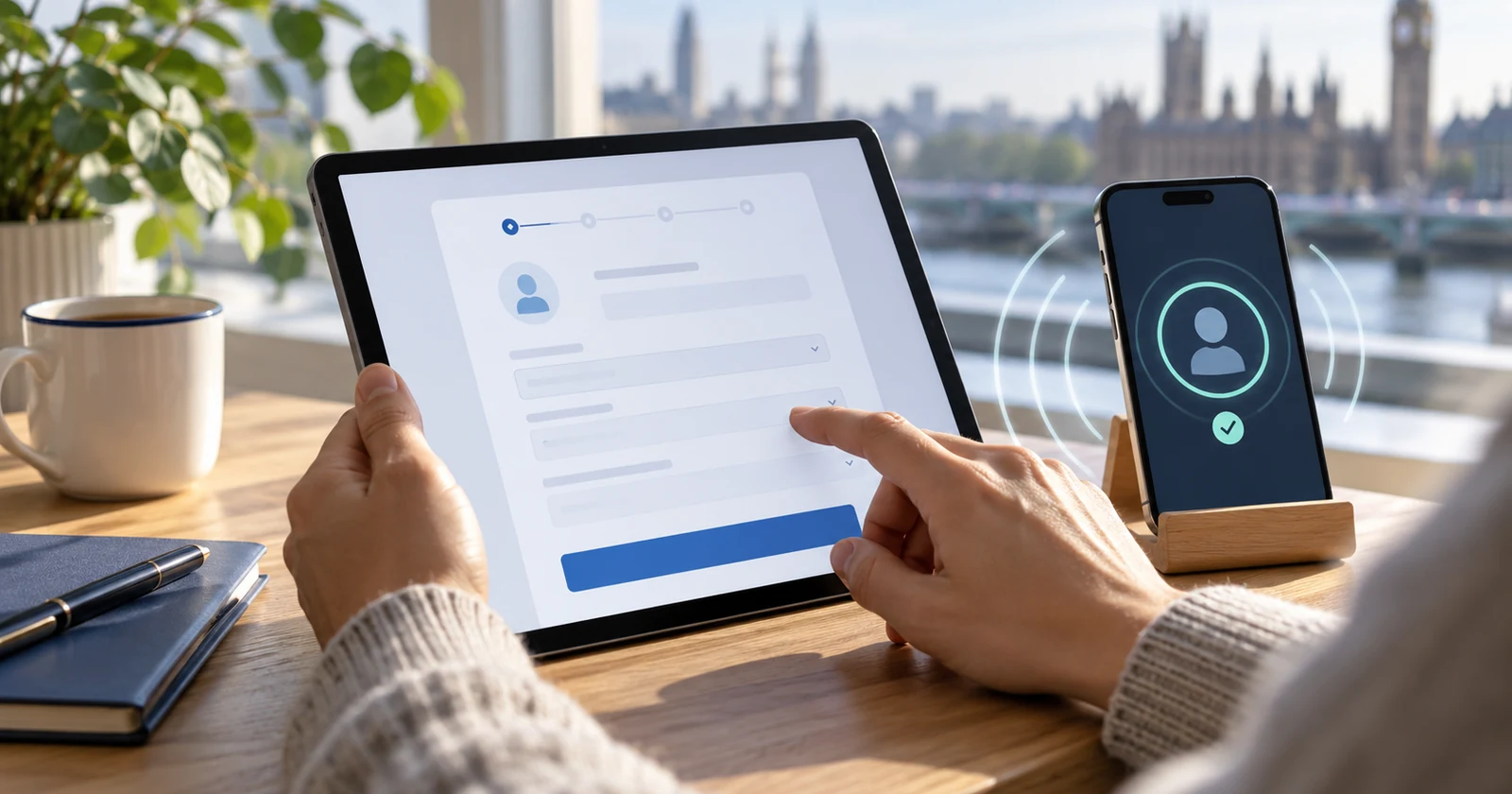


A customer completes an online application and enters a mobile number they control. They also submit a name, address and date of birth. An SMS code can show that they can access the number, but it cannot tell the business whether those identity details match the person associated with that number.
A KYC Match API addresses that separate question by comparing information supplied for a customer with records held by the mobile network and associated with the submitted number. In TDS Risk, Mobile KYC returns match information for name, address and date of birth so the business can assess the outcome within its own onboarding or verification process.
The distinction is important: the check matches identity details to the number the applicant actually entered. It does not prove that the person at the screen physically controls the phone, and it does not make the final decision.
What is a KYC Match API?
A KYC Match API is an interface that lets a business submit identity attributes and a mobile number for comparison with relevant carrier-held identity information. The response indicates how the submitted attributes align with records associated with that number.
The phrase "KYC Match" describes the comparison. It should not be confused with completing every element of a business's customer due diligence. A match can support an identity check, but businesses may still need documents, biometric verification, credit checks or other controls for their use case.
Why matching the number used matters
An applicant may pass a basic phone contact step because they receive an OTP on a number they control. That proves access to a messaging or calling channel at that moment. It does not establish that the applicant's declared identity belongs with the number.
For example, someone could use their own mobile number while submitting another person's name or date of birth. Mobile KYC compares those submitted details with the carrier-held information linked to that exact number. A mismatch can then be considered by the organisation's own rules.
This is different from verifying that a device is currently using a particular phone number. The business should be precise about which question it needs answered: access to a channel, identity details associated with a number, or broader identity evidence.
What details can Mobile KYC match?
TDS Risk Mobile KYC checks the submitted:
- Name
- Address
- Date of birth
The API returns match information for those supported attributes. A business can assess the individual outcomes rather than treating a passed OTP as if it had verified every field.
Results should be interpreted carefully. Names can be formatted differently, addresses may be incomplete or out of date, and information can change. A mismatch is a reason to apply the business's process, not automatic proof that an applicant is lying.
How does a KYC Match API flow work?
- The customer enters a mobile number and the identity details required by the business.
- The business sends the submitted number and attributes through its authorised integration for the declared use case.
- The Mobile KYC service compares supported attributes with carrier-held information associated with the submitted number.
- The response returns match information that the business can evaluate.
- The business applies its own policy: continue normally, request additional evidence or route the case for review.
This can fit early in digital onboarding, before a business commits to later checks or manual work. It can also complement an existing identity flow where an OTP is used for contact verification but does not answer the identity-match question.
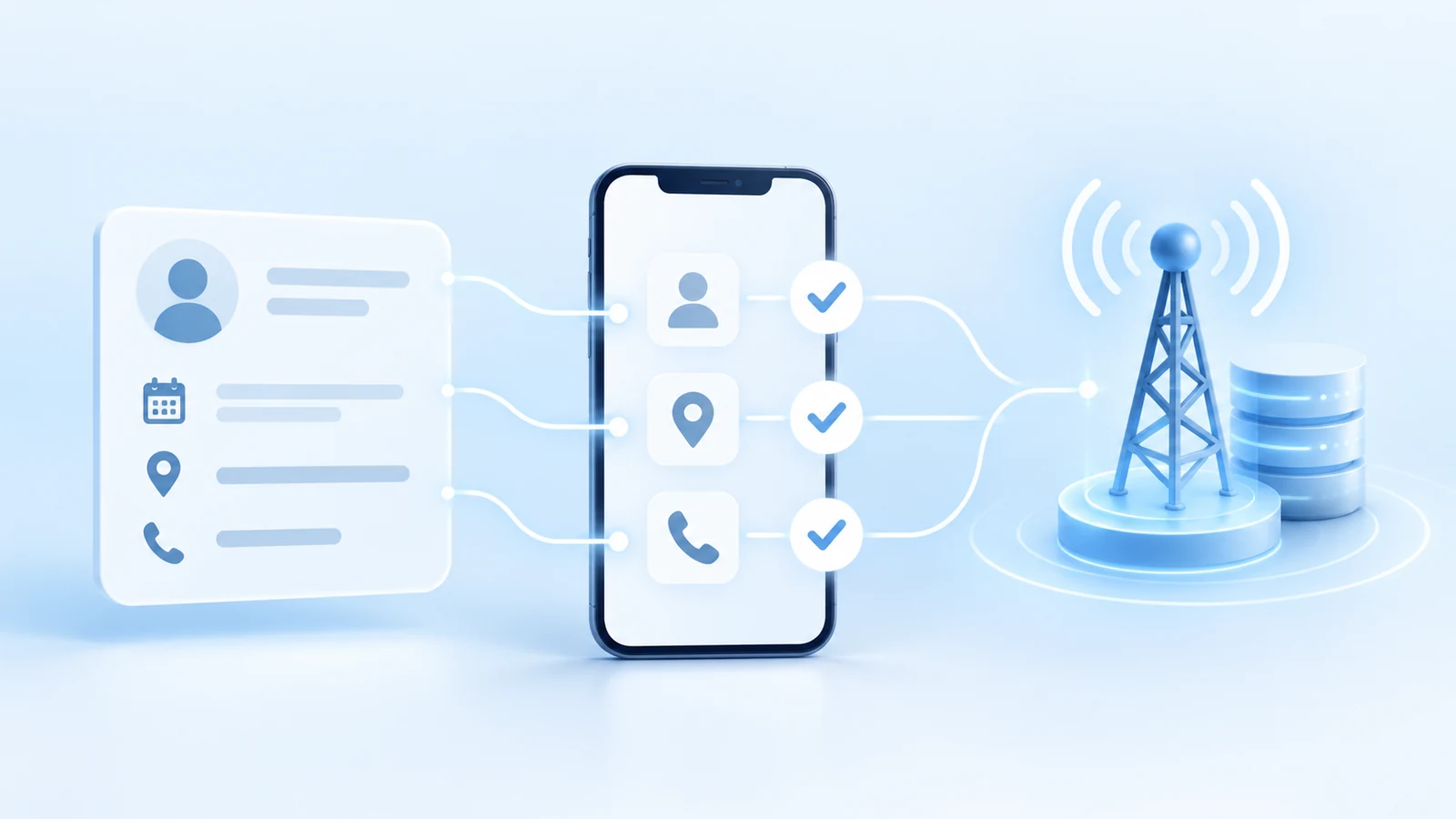
Mobile KYC checks whether the identity details match the carrier-held record linked to the number entered, not whether the applicant can receive an OTP.
Mobile KYC compared with other checks
OTP verification
An OTP tests whether someone can access a communication channel connected with a number at that time. It does not compare the applicant's name, address or date of birth with carrier-held information.
Document and biometric checks
Document or biometric methods assess identity evidence through other means. A KYC Match API can add a carrier-based data point, but does not replace steps that the business's policy or applicable requirements call for.
Trust Score
TDS Risk Trust Score assesses carrier-derived mobile risk signals such as SIM activity and line-type information. Mobile KYC checks whether the submitted identity attributes match carrier-held records associated with the number. A business may use either or both, depending on what it needs to assess.
Where can Mobile KYC be used?
Mobile KYC may be relevant when a business collects identity details and a mobile number during digital onboarding. Examples include a lending application, an insurance quote, account creation or lead verification. The business chooses the point in the journey, purpose and action after the response.
For a lender, it can surface a mismatch before the applicant moves further into a credit or underwriting process. For an insurer, it can add identity context before a quote becomes a policy. For a lead buyer, it may help assess whether the identity details supplied with a lead align to the number used.
These examples describe possible workflows, not guaranteed fraud outcomes. TDS supplies carrier-derived match information; the business remains responsible for its decision and the lawful use of the check.
TDS Risk Mobile KYC
TDS Risk Mobile KYC returns match information for submitted name, address and date of birth against carrier-held information associated with the number provided. The check costs £0.45 excluding VAT. There are no contracts, minimum volumes or setup fees, and prepaid credit does not expire. See TDS Risk pricing, the API quickstart and the Mobile KYC FAQ.
For a lending-specific example, read Mobile KYC for lending, or start from TDS Risk.
Summary
A KYC Match API compares submitted identity attributes with carrier-held information associated with the number entered. It is useful because it answers an identity-match question that an OTP alone does not. It should be combined with the rest of the business's verification process, interpreted proportionately and never treated as a standalone fraud verdict.
Check how submitted name, address and date of birth align with carrier-held information linked to the number provided.
Explore Mobile KYC 👉🏼Frequently asked questions
If it's not here, ask us directly — we reply within one UK business day.