

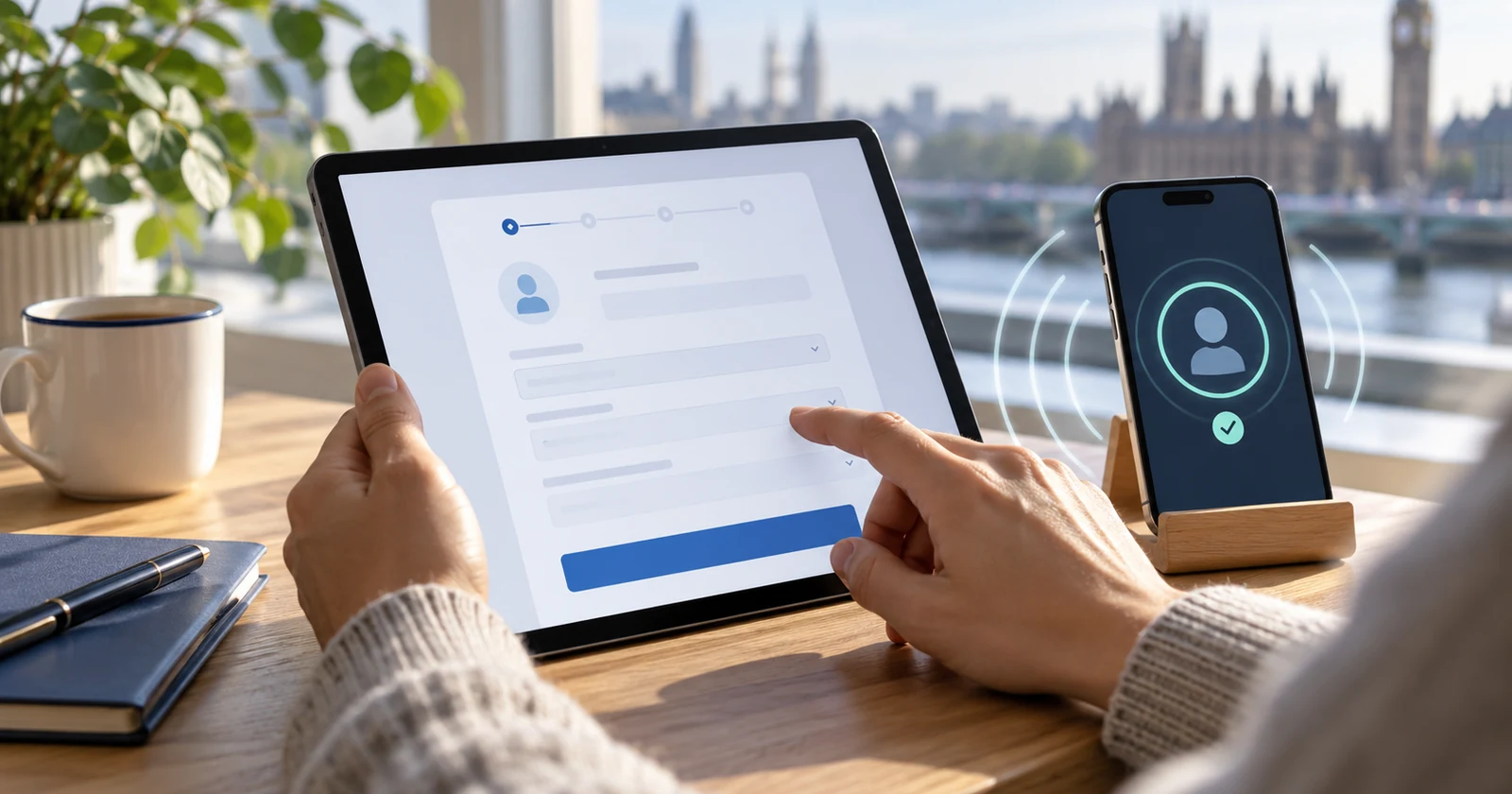
A loan applicant enters their name, address, date of birth and mobile number. The lender sends an OTP to the number, and the applicant enters it successfully. That confirms access to the number's communication channel. It does not, by itself, show whether the identity details supplied belong with that number.
Mobile KYC adds that comparison. It checks whether the submitted name, address and date of birth match carrier-held information associated with the exact mobile number the applicant entered. For a lender, this can provide an additional piece of evidence early in the application journey, before later processes such as credit checks, underwriting or manual review.
The result is not a lending decision or proof of fraud. The lender decides how to use it alongside affordability, credit, identity and other policy controls.
What Mobile KYC can add to a lending application
Mobile KYC answers a specific question: do the applicant's submitted identity details match the network-held information associated with the mobile number on the application?
That matters because someone can receive an OTP on a number they control and still submit details that do not match the person associated with that number. A carrier-based identity match can surface that discrepancy for the lender's own process to assess.
TDS Risk Mobile KYC returns match information for name, address and date of birth. It is not a credit-reference check, an affordability assessment or a complete identity verification process. It should be used as one input in the lender's wider onboarding design.
A lending application story
Consider two applications that both pass an SMS code step. In the first, the applicant's submitted details align with carrier-held information linked to the number. The lender's own rules may let the normal journey continue, while still applying every other required check.
In the second, the OTP is received but one or more submitted identity details do not align with the carrier-held record associated with that same number. The mismatch does not establish why. It gives the lender information it can use to request more evidence or route the case for review, according to its policy.
This is the practical difference between access and identity matching: the applicant can control the number and still provide identity details that do not match it.
Where to place the check in the lending flow
Lenders should choose a point where the identity match can inform the journey without needlessly adding friction. For example:
- Collect the applicant's name, address, date of birth and mobile number in the application.
- Run Mobile KYC before committing to selected downstream checks or manual processing.
- Review the returned match information alongside the application and other controls.
- Let the lender's policy decide whether to continue normally, request additional verification or refer the application.
- Retain the appropriate decision and evidence according to the lender's governance and retention requirements.
This early step may help a lender identify mismatches before spending on later processes. Whether it reduces cost depends on the lender's volumes, check placement, downstream costs and the way its rules use the result; calculate that with the lender's own data rather than assuming a guaranteed saving.
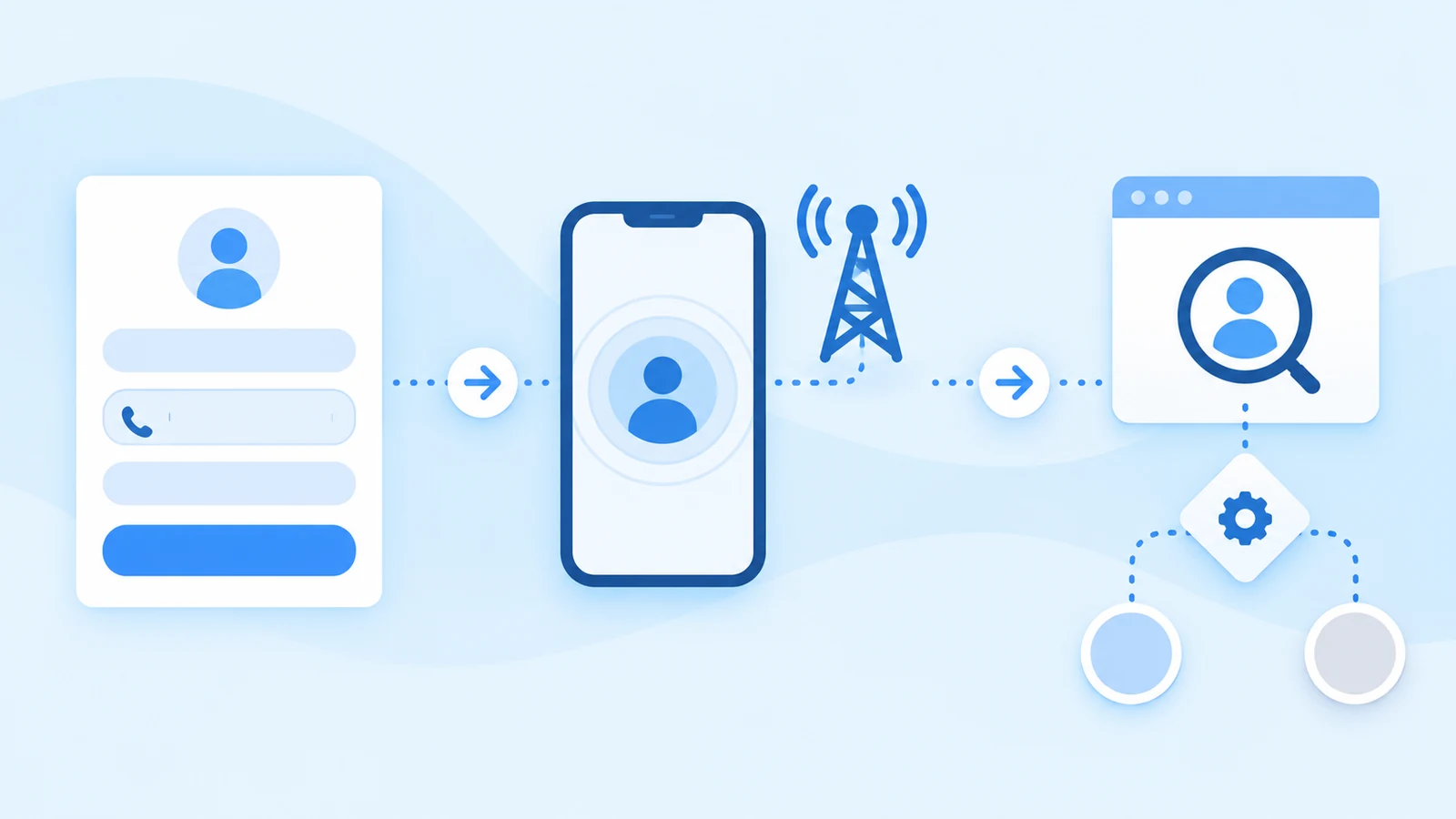
Mobile KYC links the applicant's submitted identity details to the number they actually entered; it does not decide whether the loan should be approved.
Mobile KYC, OTP and Trust Score in lending
These checks answer different questions and should not be described as interchangeable.
OTP verification
An OTP checks access to a messaging or calling channel associated with the number at that moment. It does not match the applicant's identity attributes to carrier-held details.
Mobile KYC
Mobile KYC checks whether the submitted name, address and date of birth match carrier-held information associated with the number the applicant supplied. It adds an identity-match signal to the lender's existing checks.
Trust Score
Trust Score assesses carrier-derived mobile risk signals, which can include recent SIM activity and line-type information. It is separate from Mobile KYC: one assesses mobile-number risk signals, while the other compares identity details associated with that number.
A lender can choose the check or combination that fits the specific decision point. For example, a Mobile KYC identity match may be relevant at application, while a recent SIM-change signal may be more relevant around account recovery or a sensitive change. The lender should define the use and response.
Handle mismatches proportionately
A mismatch is not the same as confirmed fraud. Information can be incomplete, formatted differently or out of date. The lender should consider how much weight each attribute has, what other evidence is available and what next step is fair for the applicant.
Avoid automatically rejecting applications solely because of a mobile signal. A proportionate workflow might continue if the wider case is consistent, request additional evidence when a material discrepancy appears, or send a case for review. The lender's policy and obligations determine the appropriate approach.
TDS Risk Mobile KYC for lenders
TDS Risk Mobile KYC compares submitted name, address and date of birth with carrier-held information associated with the mobile number supplied. The check costs £0.45 excluding VAT. There are no contracts, minimum volumes or setup fees, and prepaid credit does not expire. See the lending use case, pricing and quickstart.
For an overview of the identity-match API, read what a KYC Match API does. For mobile-number risk signals, see how businesses detect SIM swap risk before account takeover.
Summary
Mobile KYC can add an early comparison between a loan applicant's submitted identity and carrier-held information associated with the number they entered. It answers a different question from an OTP, a credit check or a Trust Score. The lender uses the result with its wider evidence and decides how the application proceeds.
Add a carrier-based identity match to your lending application workflow.
Explore Mobile KYC 👉🏼Frequently asked questions
If it's not here, ask us directly — we reply within one UK business day.