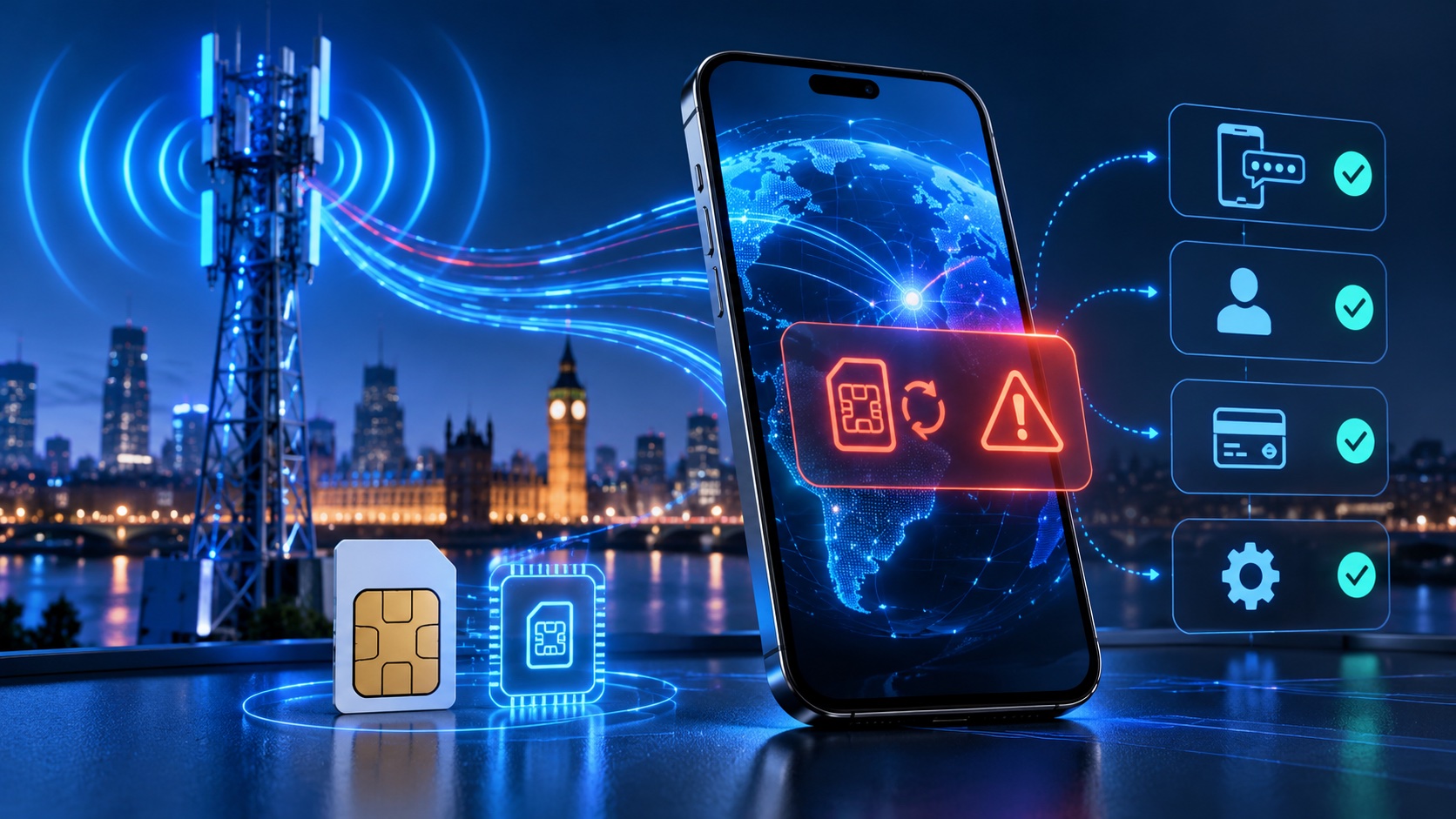


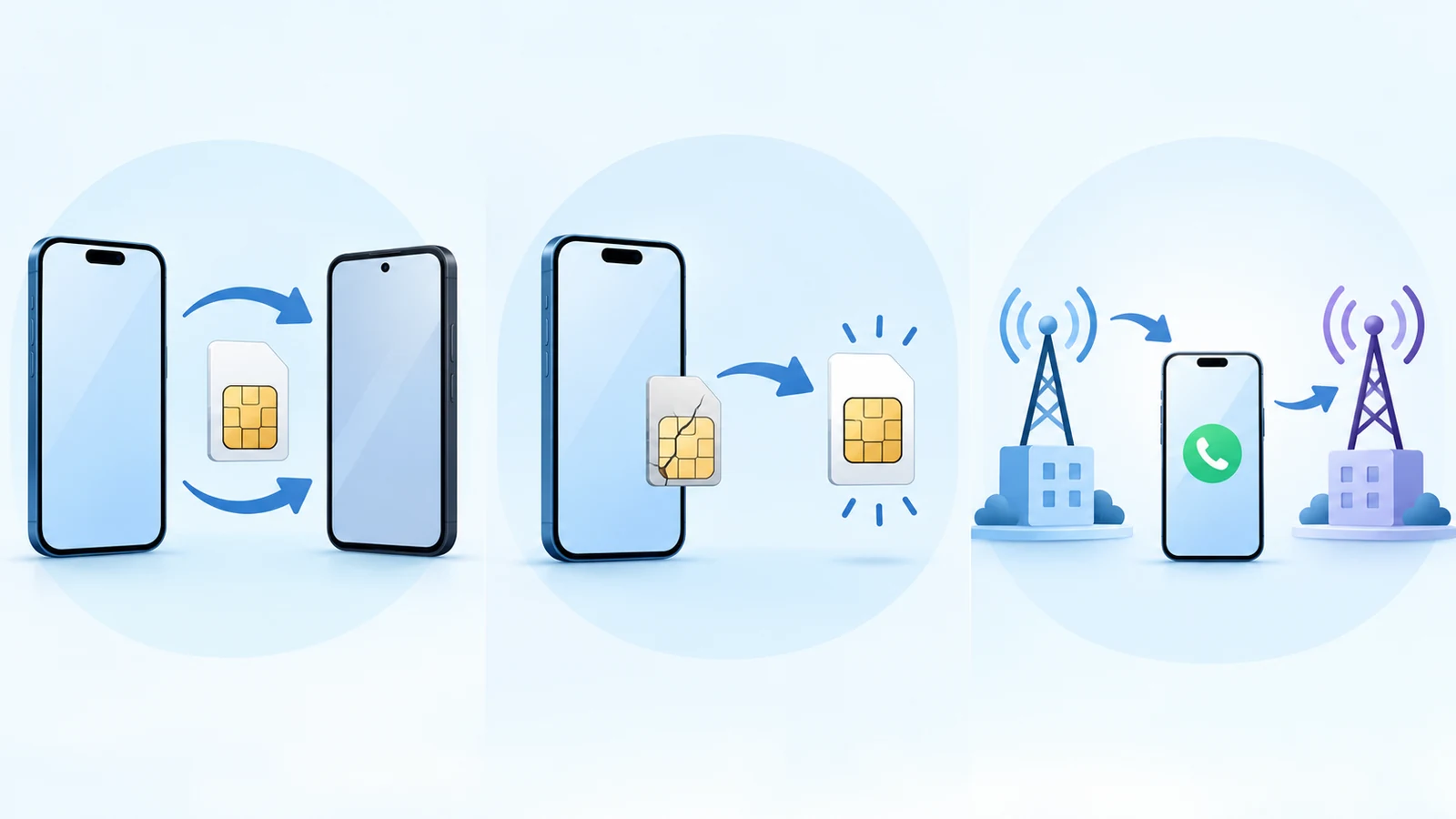
A customer changes mobile provider and keeps the same number. Another customer loses a SIM and asks the provider for a replacement. A third person's number is moved to a SIM controlled by a criminal. All three situations involve a mobile service change, but they are not the same event.
The terms can be confusing because people sometimes use "SIM swap" to mean any change of SIM. In fraud discussions, it usually means an unauthorised transfer that lets someone else receive calls or texts for a victim's number. Number porting is a regulated way to keep a number when changing provider. A replacement SIM is often a routine customer-service action.
Understanding the difference matters when a business uses mobile-network signals in fraud controls. A change can be relevant, but it is not automatically suspicious or proof of fraud.
What is a SIM swap?
A SIM swap is a transfer of a mobile number's service from one SIM to another. If the transfer is authorised by the account holder, it may be a normal change of device or SIM. If a criminal persuades or manipulates the mobile provider into transferring the service to a SIM they control, it can become SIM swap fraud.
Once an unauthorised transfer is completed, the criminal may receive calls and text messages intended for the customer. This can put SMS-based password recovery or one-time codes at risk, depending on the service's other protections.
What is a SIM replacement?
A replacement SIM is issued when a customer needs a new SIM for a legitimate reason, such as a lost, damaged or incompatible card. The mobile number may continue on the replacement SIM. A change of device, a move to eSIM or a provider's normal account process can also result in service being activated on a different SIM profile.
The important difference is authorisation and context. A valid replacement request is a normal customer action. A fraudulent SIM swap involves an unauthorised transfer. A signal that a SIM changed does not, on its own, tell a business which situation took place.
What is number porting?
Number porting lets a customer keep their phone number when switching mobile provider. Ofcom describes this as keeping a number when changing provider and explains the consumer switching process in its mobile switching guidance.
Porting changes the provider associated with a number. A SIM swap changes which SIM is serving the number. These concepts can be related in some fraud scenarios, but ordinary porting is a legitimate switching process and should not be treated as evidence of fraud by itself.
Quick comparison
Event
What changes
Typical context
What a business should infer
The table is a plain-language distinction, not a complete technical description of every carrier workflow. Network processes and the information available to a business can vary.
Why the distinction matters for fraud checks
Suppose a customer requests a password reset shortly after moving their number to a new SIM. The event may be a legitimate replacement, but it is still relevant because the account relies on that number for recovery. The service can combine the signal with account history, device information and the sensitivity of the requested action.
Now consider an insurer checking a mobile number on an application. A number's line type or recent activity may be one factor among several when deciding whether to accept the application normally or ask for more evidence. Mobile data does not establish the applicant's intentions and should not be used as the sole reason to decline someone.
How carrier-derived checks fit
TDS Risk Trust Score assesses carrier-derived mobile risk signals, which may include SIM activity and other number indicators. It provides evidence for a business's own rules; it does not label every SIM change as fraudulent or make the final decision.
That is different from Mobile KYC. Mobile KYC compares submitted name, address and date of birth with carrier-held identity information associated with the exact number the applicant entered. The identity match and mobile-risk assessment answer different questions. See TDS Risk for the product overview and reason codes for explanations of returned signals.
Businesses should choose the point in their journey that makes sense: for example, before a sensitive account change, during an application or before routing a lead. Read the quickstart and pricing to assess implementation.
The takeaway
SIM swap, replacement SIM and number porting describe different things. A recent SIM change may be important to an account security decision, but the change alone does not establish that fraud has happened. Use carrier-derived information with context, other controls and a proportionate response.
For a wider explanation, read what SIM swap fraud is or how to detect SIM swap risk before account takeover.
See how carrier-derived mobile risk signals can support your existing review and verification process.
Explore Trust Score 👉🏼Frequently asked questions
If it's not here, ask us directly — we reply within one UK business day.