


A motor insurance application arrives with a plausible name, address and vehicle details. The applicant has also entered a mobile number and received an OTP. The quote journey may appear complete, but the insurer still has a practical question: do the identity details supplied with the application match the information held by the mobile network for the number entered?
Ghost broking can involve selling fake insurance or arranging a genuine policy using false information, which may leave a customer without the cover they think they have. The FCA's guide to insurance scams explains how ghost broking works. Mobile signals do not identify every ghost-broking case, but they can add another source of evidence before a quote becomes a policy.
TDS Risk provides separate checks for separate questions. Mobile KYC compares submitted name, address and date of birth with carrier-held information associated with the exact number used. Trust Score assesses carrier-derived mobile risk signals, such as recent SIM activity and line-type information. The insurer decides how to use each result.
Where mobile checks fit in an insurance quote
Motor insurers already have underwriting, fraud, identity and pricing controls. A carrier-based mobile check can sit early in the application journey, while the insurer is deciding whether the information submitted merits a normal continuation or another step.
The sequence might look like this:
- The customer submits their personal details, vehicle information and mobile number.
- Mobile KYC checks whether the submitted name, address and date of birth match carrier-held information linked to that number.
- Trust Score can add mobile risk context, including supported indicators such as recent SIM activity and line type.
- The insurer evaluates the results with the application and its existing controls.
- The insurer decides whether to continue normally, request more information or refer the application for review.
The check is most valuable when the number used in the application is the same number assessed. The insurer is not simply verifying that an OTP was delivered; Mobile KYC compares the identity information submitted against the carrier-held record associated with that number.
A ghost-broking scenario
Imagine an application submitted with a real person's name and address but a mobile number controlled by someone else. An OTP may be received successfully because the applicant controls that number. That does not establish that the submitted identity details belong with it.
Mobile KYC can surface a mismatch between the submitted attributes and the carrier-held information associated with the number. Trust Score can separately return risk information about the mobile number. Together, they give the insurer more context to assess. Neither result establishes that the application is a ghost-broking case; the insurer must examine the full circumstances.
This distinction keeps the check useful and fair. A discrepancy may have a legitimate explanation, and a consistent match does not guarantee that every part of an application is truthful.
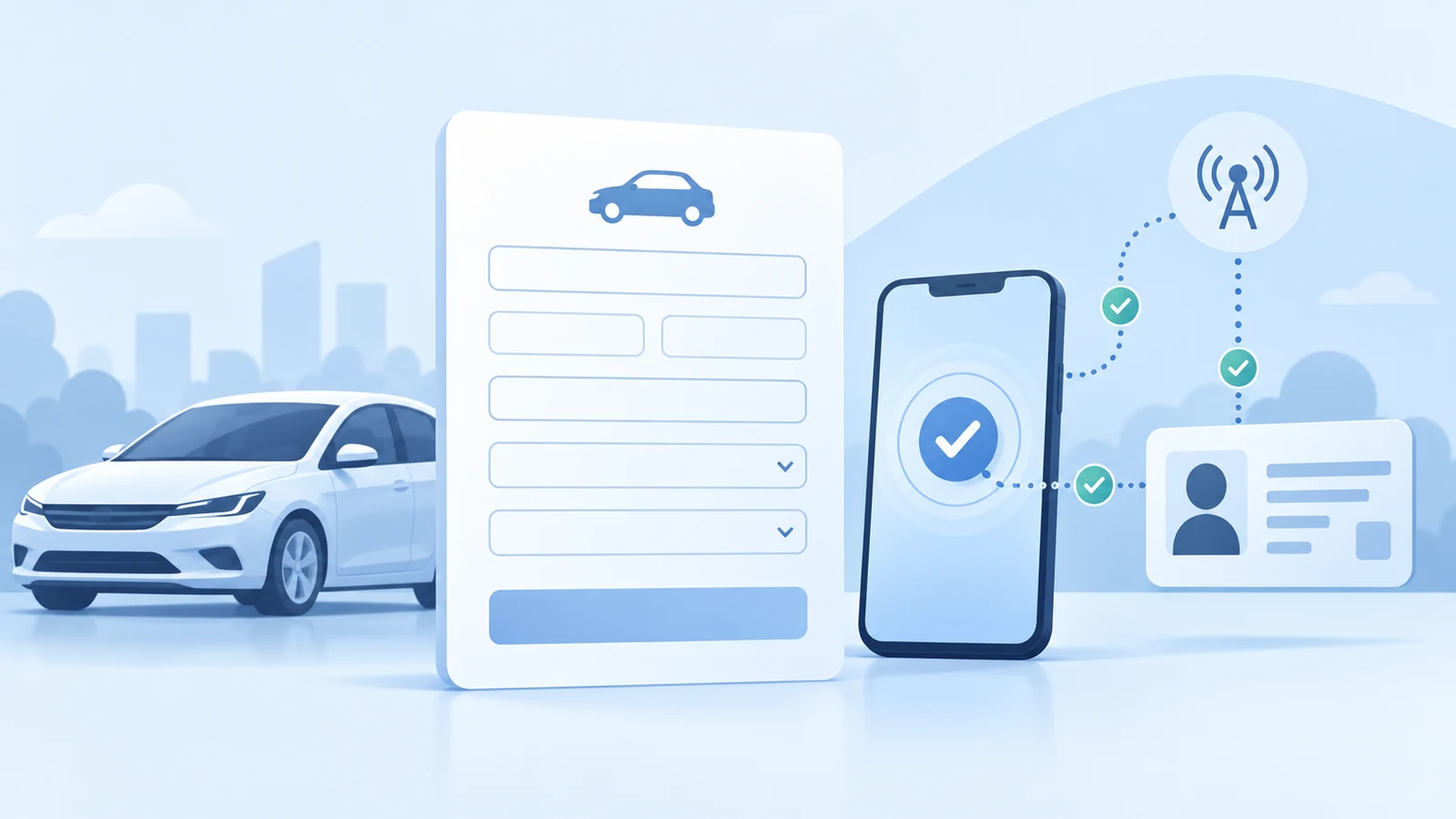
A number can receive an OTP while the identity details on the application still fail to match the carrier record linked to that number.
What Mobile KYC adds beyond an OTP
An OTP tests access to a communication channel associated with the number at the time of the check. It does not compare submitted identity attributes with carrier-held details.
Mobile KYC checks the submitted name, address and date of birth against information associated with the number the applicant entered. This matters in insurance onboarding because it connects the application identity to the actual number supplied, rather than assuming that successful code entry proves the identity.
Trust Score answers a different question. It provides carrier-derived risk signals about the mobile number. An insurer may use Mobile KYC, Trust Score or both, depending on its process and the decision being made.
Use results proportionately
Mobile checks should contribute to an insurer's assessment, not become an automatic acceptance or decline rule without appropriate validation. Consider whether details may be formatted differently or out of date, how a signal combines with other application facts and what additional evidence is suitable.
An insurer might allow a consistent application to continue through its ordinary underwriting process. A mismatch or mobile-risk signal might trigger a clarification, another verification step or a referral under the insurer's own rules. The check should not be represented as a complete motor insurance fraud detector.
The insurer should also establish where to run a check, how to explain its use, who can review the result and how the result is retained under its documented processes.
TDS Risk for insurance applications
TDS Risk offers Mobile KYC and Trust Score through one platform. Mobile KYC returns match information for submitted name, address and date of birth against carrier-held information linked to the number provided. Trust Score provides separate carrier-derived mobile-risk signals. Each check is linked to an audit record, and the insurer remains responsible for the assessment and decision.
See the insurance use case, pricing, reason codes and quickstart. For a broader product explanation, read what Mobile KYC is and what SIM swap fraud means.
Summary
For motor insurers, Mobile KYC can check whether the applicant's submitted name, address and date of birth match carrier-held details associated with the number used. Trust Score adds a distinct view of mobile-number risk. These signals can help inform pre-policy review, but the insurer decides what action is appropriate and should consider the complete application.
Add carrier-derived mobile identity and risk signals to your insurance application workflow.
Explore TDS RiskFrequently asked questions
If it's not here, ask us directly — we reply within one UK business day.